A New Academic Strategic Achievement for Cihan University
A New Academic Strategic Achievement for Cihan University
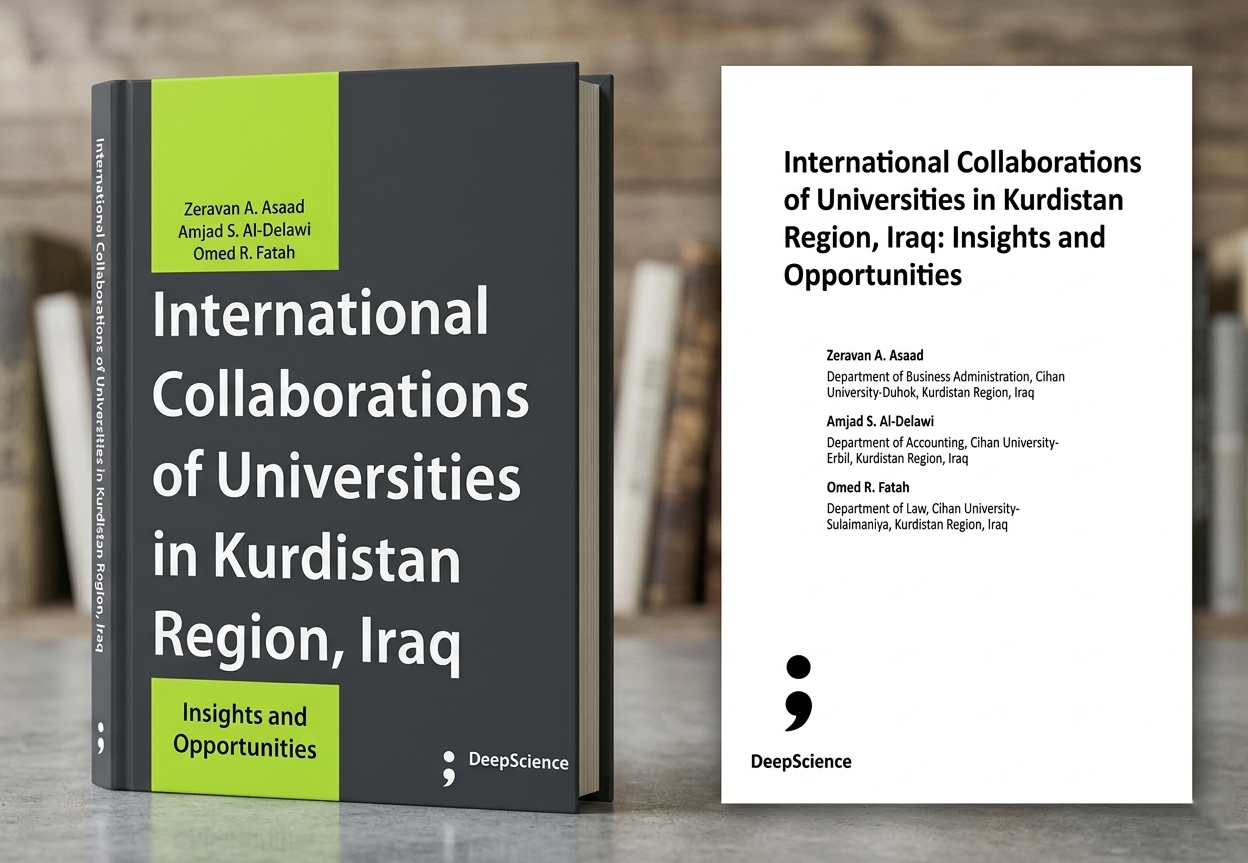
Cihan University continues to enrich the landscape of scientific research by proudly announcing the publication of a significant strategic work titled: "International Collaborations of Universities in the Kurdistan Region-Iraq: Insights and Opportunities." This book serves as a vital scientific roadmap for understanding the dimensions of international cooperation and enhancing the quality of higher education.
This monumental effort has been authored by a distinguished group of experienced scholars:
- Prof. Dr. Zeravan Abdulmuhsen Asaad:
Research Interests: Financial Management and Investments.
- Prof. Dr. Amjad Saber Al-Delawi:
Research Interests: Accounting Analysis and Money Markets.
- Prof. Dr. Omed Rafiq Fatah:
Research Interests: Public Policy and International Security.
This scholarly achievement is expected to be a powerful catalyst and an invaluable resource for researchers, policymakers, and relevant institutions, providing the scientific foundation necessary to advance the academic system and foster global partnerships.
Title of the Book:
International Collaborations of Universities in Kurdistan Region, Iraq: Insights and Opportunities
Synopsis
The book helps to fill a serious gap in the literature by categorically examining the aspects of scientific collaboration and research performance within the framework of the Kurdistan Region of Iraq by providing an analysis of scientific collaboration and research performance among the private universities. Using the information provided in the Scopus database, it analyses the research productivity, visibility, efficiency and patterns of collaboration both nationally, regionally and internationally, with comparative reflection on the countries on the periphery. The dataset consists of Scopus-indexed articles associated with 13 privately-owned universities, and has the date of the first publication in 2009 up to December 2024. The data were collected by hand in April-May 2025 to guarantee accuracy and consistency of the institutions. One of the quantitative methods of analysis is the use of bibliometric indicators such as the total documents, number of citations per document, h-index, productivity index, the efficiency ratio, and the measures of the international collaboration. The analysis shows that the research output has grown significantly since the introduction of the National University Ranking (NUR) Project in 2015, and the publication volume has grown over three times in 2 years. Nevertheless, scientific collaboration continues to be largely limited to the major institutions of higher learning where there is an insignificant participation of industry, government agencies, and foreign partners. In addition, collaboration patterns are similar between the private universities and the public institutions, and the participation of local researchers is constrained and collaborative networks are not diversified. Although the number of publications in the case of the private universities is lower compared to the public universities, the research impact and efficiency are relatively higher in the former as shown in terms of citation measures. The paper highlights how vital strategic policy interventions are to ensure international cooperation, build better university-industry-government connections, and improve research capacity development. The findings can be helpful to policy makers, university administrators and other stakeholders to design specific initiatives to enhance the quality of research, internationalization, and sustainable scientific cooperation in the higher education system in the Kurdistan Region.