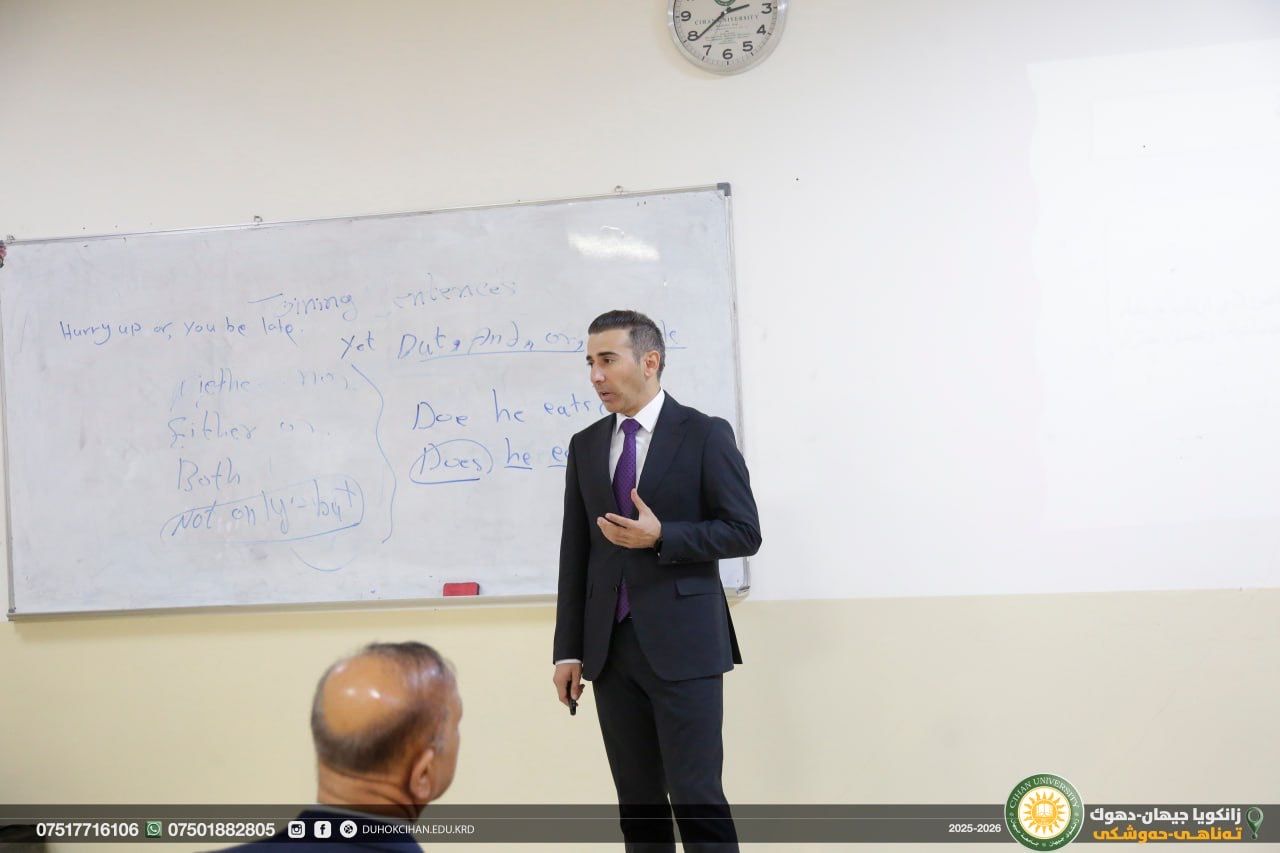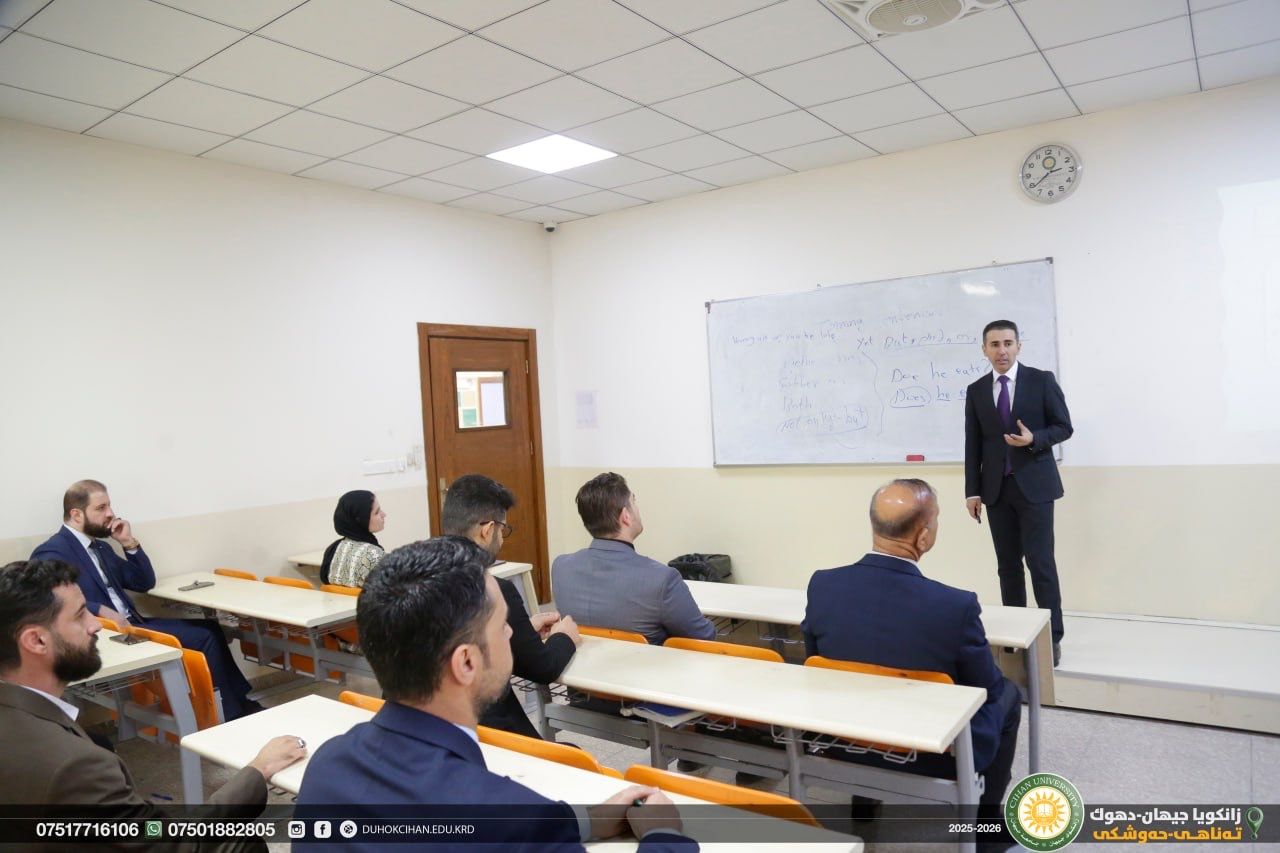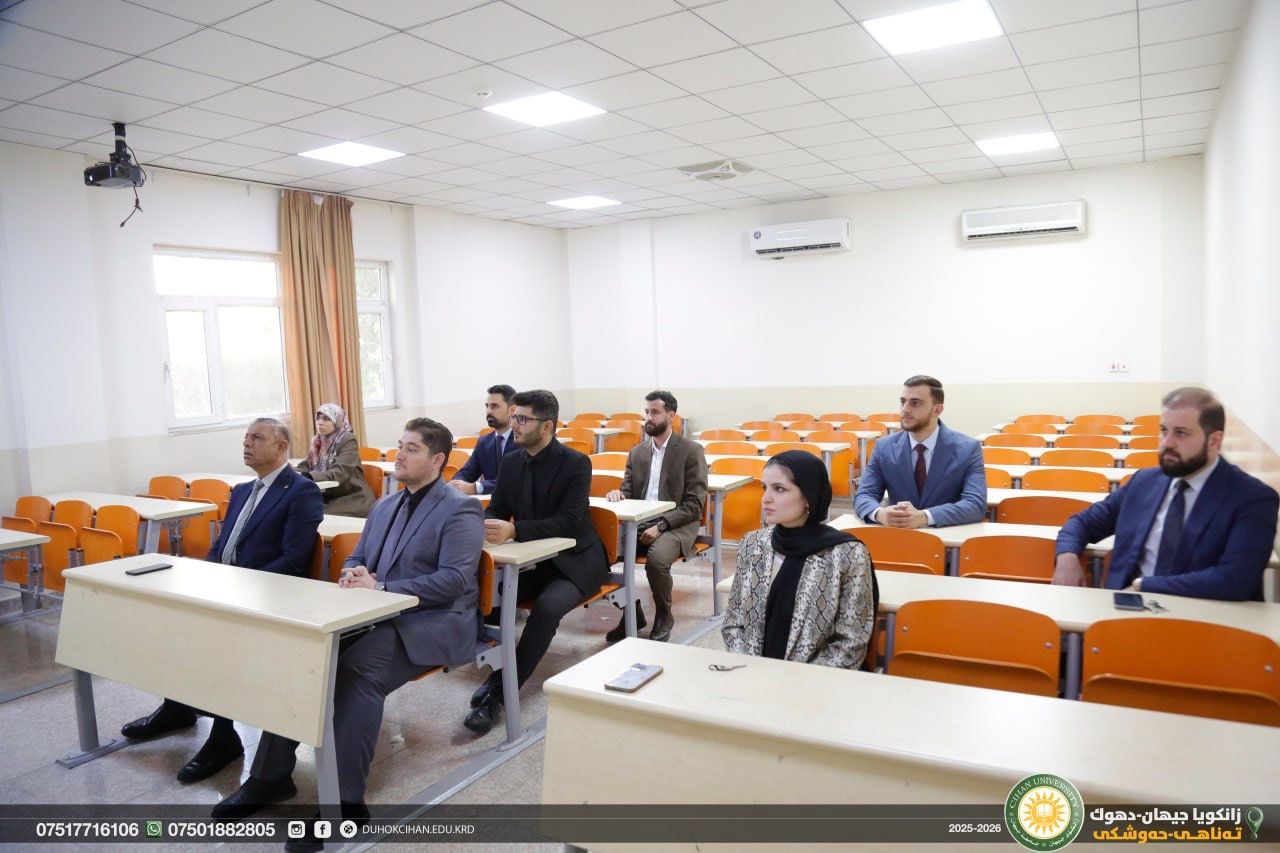
A Symposium entitled: Alternatives to Short-Term Custodial Sentences in the Framework of Iraqi Criminal Law

on (Nov 18, 2025) in the presence of the head of departments and lecturer a symposium entitled
Alternatives to Short-Term Custodial Sentences in the Framework of Iraqi Criminal Law, was presented by (Dr. Djwar Ahmad Piramis) from the Law department , Where it has been explained about, This research aims to highlight the importance of alternatives to short-term custodial sentences within the framework of Iraqi criminal law, as an effective means of achieving criminal justice and reducing the negative consequences of traditional punishments. Short prison terms often fail to fulfill the purposes of deterrence or rehabilitation; instead, they contribute to prison overcrowding and hinder the reintegration of offenders into society.
The study examines the main alternatives that could be adopted in Iraqi legislation, such as fines, community service, suspended sentences, conditional release, and judicial supervision, clarifying the legal basis for each and their consistency with modern penal policy.
The research concludes that Iraqi criminal law still requires comprehensive reform to adopt a clear legislative policy on alternative sanctions, in line with international recommendations and the principles of restorative justice. Such reforms would help reduce crime, promote the rehabilitation of offenders, and facilitate their positive reintegration into society.
, At the end of the symposium it is clear that adopting alternatives to short-term custodial sentences is no longer a mere option, but a necessity dictated by considerations of justice, criminal effectiveness, and human rights principles. Traditional short-term imprisonment has proven largely ineffective in achieving deterrence or rehabilitation, while contributing to social and penal problems and weakening the prospects for reintegrating offenders into society.The research highlighted that, although Iraqi criminal law includes some partial mechanisms, such as suspended sentences and conditional release, it still requires a comprehensive penal policy that embraces modern alternatives, such as community service, judicial supervision, and proportionate financial penalties. These measures serve restorative justice and reduce unnecessary custodial sentences.